When temperatures plunge, your furnace becomes one of the most important systems in your home. Unfortunately, winter is also when furnaces are under the most stress—and when problems tend to show up. Before you assume the worst or wait too long to act, homeowners can take a few practical steps to determine whether a furnace issue is an emergency that requires immediate professional repair.
Below are five steps to help you quickly assess the situation and protect your comfort and safety during the coldest days of winter. We offer 24/7 emergency services and are here to help when you need it!
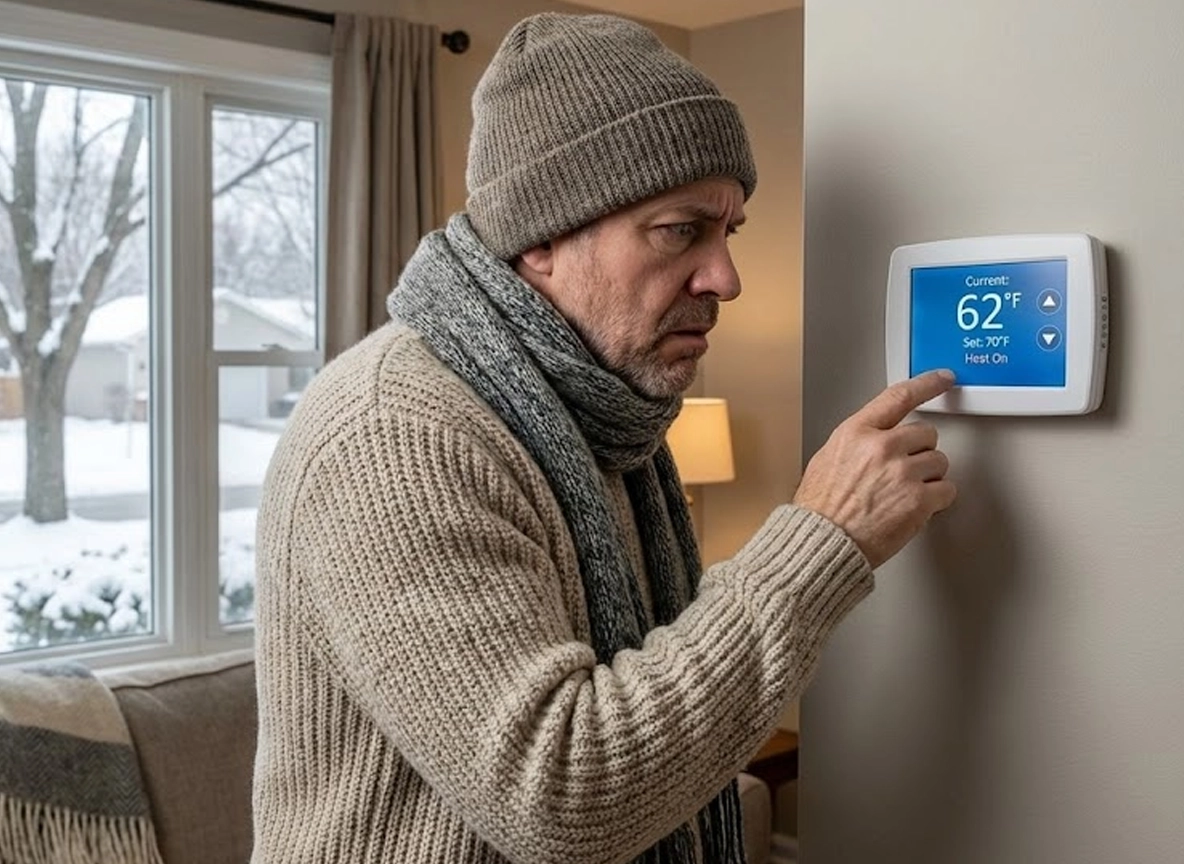
Step 1: Check the Thermostat Settings and Calibration
Start with the simplest place: the thermostat. Make sure it’s set to “heat” and that the temperature setting is higher than the current room temperature. If your thermostat uses batteries, replace them to rule out power issues.
If the furnace still doesn’t respond, the thermostat may be improperly calibrated or malfunctioning. Uneven temperatures, delayed responses, or frequent cycling can all point to thermostat problems. While recalibration or replacement isn’t always an emergency, a non-responsive thermostat during freezing weather may justify urgent service. Luckily, these can be some of the more affordable fixes when a technician addresses them.
Step 2: Inspect and Change the Air Filter
A dirty or clogged air filter is one of the most common causes of furnace trouble. When airflow is restricted, your furnace has to work harder, which can lead to overheating, short cycling, or complete shutdown.
Check your air filter and replace it if it looks dusty or clogged. If the furnace starts running normally afterward, you’ve likely avoided a bigger issue. If replacing the filter doesn’t restore heat—or the system shuts down again shortly after—there may be a more serious internal problem that needs immediate attention.
Step 3: Reset the Furnace Safely
Many furnaces have a reset function designed to shut the system down if it detects a problem. Turning the furnace off at the thermostat or breaker for a few minutes, then restarting it, can sometimes resolve temporary issues.
However, if your furnace repeatedly needs to be reset, that’s a warning sign. Frequent resets can indicate electrical problems, overheating, or sensor failures. During extreme cold, this pattern often signals the need for emergency furnace repair rather than continued DIY fixes.
Step 4: Listen, Smell, and Observe
Pay attention to unusual signs. Loud banging, grinding, or screeching noises are not normal and can indicate mechanical failure. Burning smells, strong fuel odors, or the smell of gas should never be ignored.
If you notice visible flames behaving erratically, soot buildup, or frequent system shutdowns, these could point to combustion or ventilation issues. Any smell of gas or signs of carbon monoxide risk should be treated as an immediate emergency—leave the home and call for professional help right away.
Step 5: Consider Indoor Temperature and Safety Risks
If your furnace isn’t producing heat at all, or can’t maintain a safe indoor temperature during freezing weather, you’re likely facing an emergency situation. Prolonged exposure to cold can damage plumbing, increase health risks, and make your home unsafe, especially for children, seniors, or pets.
When heat loss is severe or sudden, waiting for normal business hours may not be an option. Emergency furnace repair can prevent further damage and restore warmth when it matters most.
For emergency repairs, contact Tom Schaefer Plumbing, Heating & Cooling as soon as possible. Trusted Name, Reliable Service.