Low water pressure can be one of the most frustrating plumbing problems a homeowner faces. Whether it’s a weak shower, a slow-filling washing machine, or a faucet that barely trickles, poor water pressure can disrupt your daily routine. The good news is that many causes are common and identifiable—and in some cases, fixable. Let’s take a look at what might be causing low water pressure in your home and what you can do about it.
Common Causes of Low Pressure That Are Easy to Fix
One of the most common culprits is a clogged fixture. Over time, mineral deposits and debris can build up inside faucet aerators and showerheads, especially in areas with hard water. This buildup restricts water flow. In many cases, simply removing the aerator or showerhead and soaking it in vinegar can restore normal pressure.
Another frequent cause is partially closed valves. Your home has a main shutoff valve and often individual shutoff valves under sinks or near appliances. If one of these valves isn’t fully open—perhaps after a repair or inspection—it can limit water flow throughout the house or to specific fixtures. Checking that all valves are fully open is a quick and easy first step.
Other Causes of Low Water Pressure
Hidden leaks can also lead to low water pressure. A leak somewhere in your plumbing system allows water to escape before it reaches your fixtures. You might notice higher water bills, damp spots, or the sound of running water when nothing is on. Because leaks are often behind walls or underground, they usually require professional detection and repair.
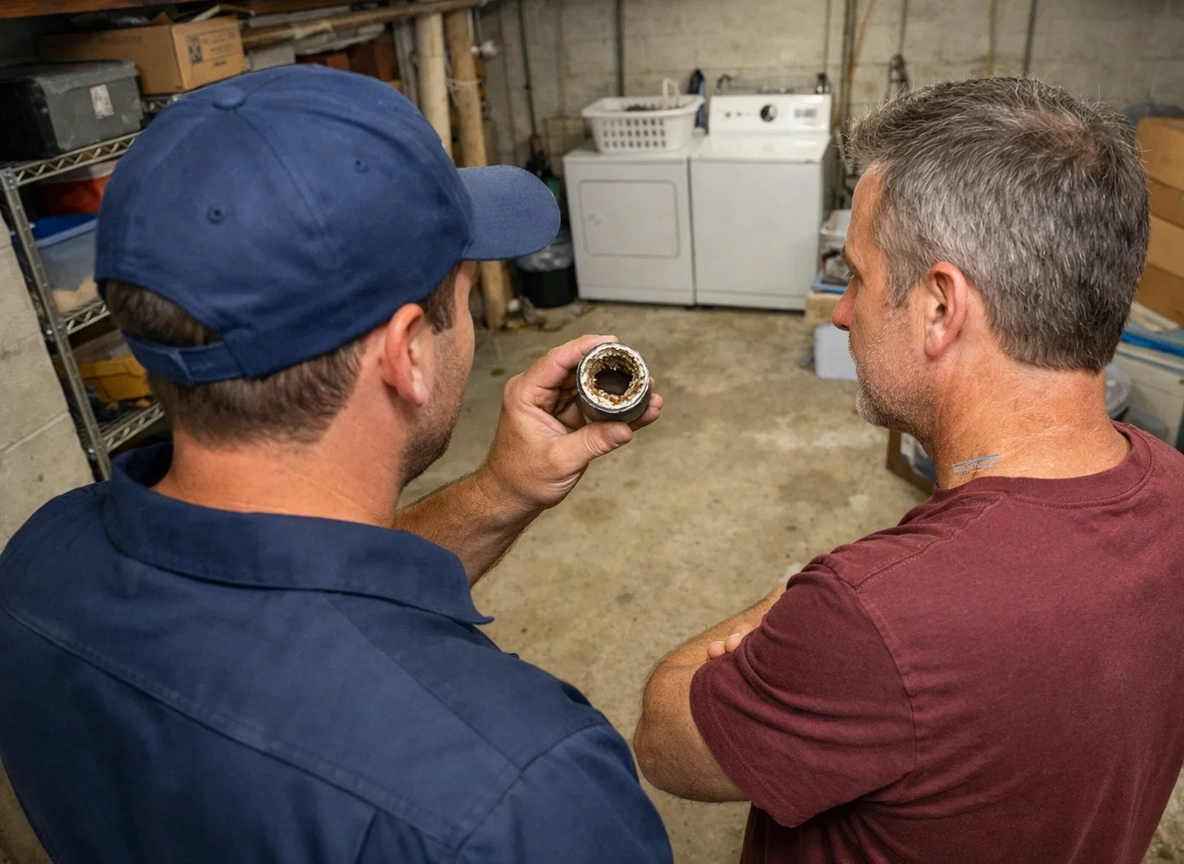
Corroded or aging pipes are another major factor, especially in older homes. Over time, galvanized steel pipes can rust and narrow from the inside, restricting water flow. Unfortunately, this isn’t a DIY fix. Pipe replacement or repiping is often the only long-term solution, and it should always be handled by a licensed plumber.
Municipal supply issues can also affect your home’s water pressure. Water main breaks, maintenance work, or peak usage times in your neighborhood can temporarily reduce pressure. If multiple homes nearby are experiencing the same problem, the issue may be outside your property.
How to Solve the Problem
While there are a few simple checks homeowners can safely perform, it’s important to know when to call a professional plumber. Low water pressure is often a symptom of a larger underlying issue, and guessing or attempting complex repairs can lead to more damage and higher costs down the line. A professional plumber has the tools and expertise to accurately diagnose the problem, recommend the right solution, and ensure your plumbing system is safe and efficient.
If low water pressure is affecting your home, don’t ignore it. Addressing the issue early—and trusting a qualified plumber when needed—can save you time, money, and a lot of frustration.
Trusted Name Reliable Service. Give Tom Schaefer Plumbing, Heating & Cooling a call to address your home’s water pressure problems.